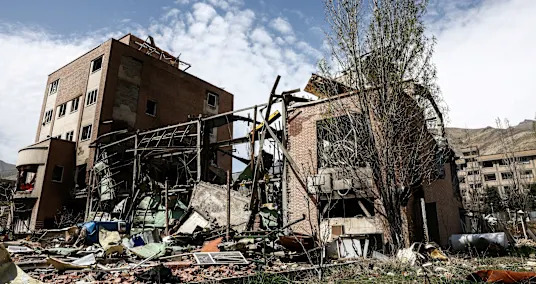
In Tehran, a city of nine million people, schools are closed, businesses are shuttered or struggling, and locals are living without a functioning air-raid warning system or public shelters. In many areas, the first sign of an incoming strike is the explosion itself.
There have been twice as many US and Israeli attacks on Iran compared to the number of Iranian retaliatory strikes since the war began — and the numbers killed in Iran have been orders of magnitude greater than in the neighboring Gulf states. A nationwide internet blackout, now entering its second month, has left civilians unable to access information about safety, shelter, and food and has meant some are unable to work. But while millions have fled Iran’s cities, many more are staying where they are. Some residents are hoping the US and Israeli bombs will cause the regime to collapse; others are left wondering if they are at risk if their neighbors are targeted.
For the many Iranians with ties to Dubai, there are other pressures, with Iranian nationals now barred from entering or transiting through the UAE. Residency permits, even for those with long-term Golden Visas, are reportedly being revoked without notice.

LATEST POSTS




 Tire Brands for Senior Drivers: Guaranteeing Security and Solace
- Four countries to boycott Eurovision 2026 over Israel’s inclusion
- 5 Family SUVs for 2024: Which One Accommodates Your Family's Needs\uff1f
- Purdue Pharma's deal means money for some victims, end of Purdue company name. Here's what to know
- Productive CRM Programming for Client Relationship The executives
- Vinicultural Investigation: A Survey of \Enjoying Fine Vintages\ Wine sampling
- Grasping the Commencement of Criminal Cases: An Extensive Outline
- Investigating the Financial History of the World: A Succinct Outline
- Astonishing Deserts All over The Planet You Really want To Visit


