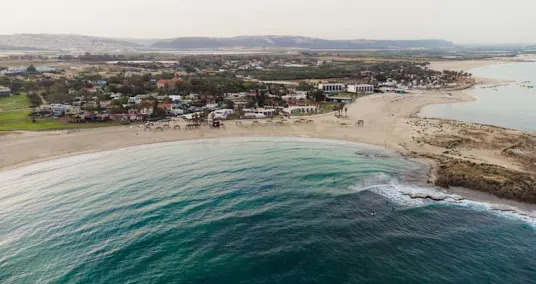
The discovery was made in an ancient shipwreck in the Dor Lagoon near the Carmel Coast, where archaeologists recovered nine pieces of unprocessed iron known as “blooms.”
Researchers from the University of Haifa said Wednesday that an underwater excavation off Israel’s northern Mediterranean coast uncovered what they described as the earliest known cargo of raw iron transported by ship, dating back around 2,600 years, Xinhua reported.
The discovery was made in an ancient shipwreck in the Dor Lagoon near the Carmel Coast, where archaeologists recovered nine pieces of unprocessed iron known as “blooms.” According to the university, the find provides direct evidence of how iron was transported in its earliest commercial stages.
The material was preserved in its original form, having solidified directly in a smelting furnace without undergoing forging or further refinement. Researchers said this distinguishes the cargo from later iron artifacts that typically show signs of shaping or tool-making.
Unlike copper and bronze, which could be melted into liquid form in ancient production processes, iron was heated with charcoal to produce a solid, porous mass. That mass was generally hammered to remove impurities and create denser material suitable for tools and implements.
The recovered blooms showed no indication of that secondary processing stage, suggesting they were transported immediately after production.

Earliest iron shipment discovered in ancient Mediterranean wreck
To determine the age and condition of the cargo, researchers conducted microscopic and chemical analyses.
Radiocarbon dating was also carried out on charred wood embedded in one of the pieces, helping confirm the timeline of the shipment. The findings were published in the journal Heritage Science.
Researchers said the cargo indicates that iron was being moved in raw form from production sites to other locations for further processing, pointing to a level of specialization in ancient manufacturing and trade networks in the Mediterranean.
The University of Haifa said the discovery provides new insight into early iron production and distribution practices in the region.
LATEST POSTS
- 1
 U.S. to drop childhood vaccine recommendations as it looks to Denmark, Washington Post reports
 - 2Court clears Beersheba assault suspect of link to Haymanut Kasau disappearance, extends detention
- 3Investigating Design and Individual Style: Track down Your Remarkable Look
- 4Flu is rising rapidly, driven by a new variant. Here's what to know
- 5The year's first meteor shower and supermoon clash in January skies


- Hamas propaganda expert explains Israel's internal conflicts influenced Hamas's Oct. 7 assault
- As tetanus vaccination rates decline, doctors worry about rising case numbers
- MEPs urge Commission leaders to stop Russia from returning to the Venice Biennale
- Novo Nordisk slashes prices of popular weight loss and diabetes drugs
- Poland identifies two Ukrainian suspects in railway sabotage blast
- How Seniors Can Use Refunds and Motivators to Purchase a Hyundai Ioniq EV
- The Tradition of Stone: A Gander at Notable Structures Through the Ages
- RFK Jr. succeeds in changing hepatitis B recommendation | The Excerpt
- NASA just launched Artemis 2. What happens today could make or break the moon mission