When you buy through links on our articles, Future and its syndication partners may earn a commission.

A vast, star-forming cloud in the constellation Orion has been unveiled in stunning detail by the European Space Agency's Euclid Space Telescope, offering a rare look at the turbulent birthplace of young stars hidden behind curtains of cosmic dust. The new image captures a swath of the dark nebula LDN 1641, where dense pockets of interstellar gas are actively collapsing to form new suns.
What is it?
Euclid's primary task is bold and cosmological in scope: create the most extensive 3D map of the universe ever made, tracing billions of galaxies to uncover the influence of dark matter and dark energy, unseen forces shaping cosmic evolution. But along the way, the spacecraft is also returning exquisite views of objects much closer to home.
Where is it?
This dark nebula is located in the Orion constellation at roughly 1,300 light-years from Earth.

Why is it amazing?
For this observation, taken in all the way back in September 2023, Euclid was not yet in full survey mode. Instead, mission engineers used LDN 1641 to fine-tune the telescope's pointing system. They needed a region where traditional visible-light navigation stars would be scarce, and this dark cloud served perfectly. In under five hours, Euclid captured an image more than three times the size of the full moon on the sky, with extraordinary sharpness and depth across 0.64 square degrees.
The success of these pointing tests ensured that Euclid could lock onto its targets with extreme precision, a key step as it continues on its cosmic survey.
Want to learn more?
You can learn more about the Euclid Space Telescope and star formation.
LATEST POSTS
- 1
 10 Moving Design Frill for Summer 2023
 - 25 Fundamental Ways to employ a Criminal Legal counselor
- 3From Fledgling to Master: Self-awareness in a Side interest
- 4The 10 Most Significant Virtual Entertainment Missions
- 5They died 'doing what they loved': The stories of workers in their 80s who died on the job




- Fundamental Home Items Each Animal person Needs
- I was about to film a movie with Glen Powell when my hair started falling out in clumps. Alopecia has made me unrecognizable as an actor.
- Nations for Youngsters to Visit
- Influencers are selling a delusional fantasy of being postpartum. Why is it so easy to believe?
- I binged all 24 Hallmark Christmas movies in less than 30 days. I emerged a changed man.
- JW Marriott Tokyo: an elegant retreat amid whirlwind of the city
- Novo Nordisk gears up for December Ozempic launch in India, sources say
- Kobe Bryant called this WNBA star the 'Gold Mamba.' She turned his advice to her into a tattoo.
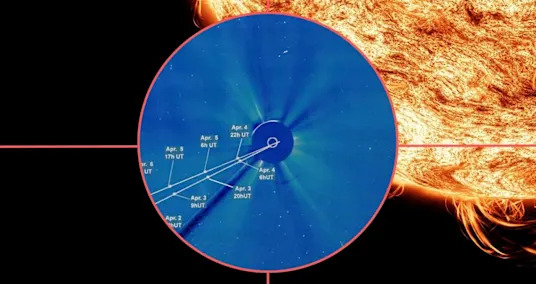
- Comet MAPS faces a make-or-break moment as it dives toward the sun on April 4 — could it shine in the daytime sky?